Truth or Dare vs. Most Likely To vs. Never Have I Ever – The Ultimate Party Question Game Showdown
When it comes to classic party games, the holy trinity of question games has to be Truth or Dare, Most Likely To, and Never Have I Ever. Chances are you’ve played at least one (if not all) of these at sleepovers, parties, or on long bus rides. They’re the games that require zero equipment – just willing participants and maybe a fearless attitude. But how do they stack up against each other? 🤔 In this ultimate showdown, we’re pitting these three legends head-to-head-to-head to see their strengths, their vibes, and which might be the best fit for your next hangout.
Think of it like a wrestling match of party games: three contenders, each with its own style. In one corner, Truth or Dare, the bold classic that can get really wild or deeply personal. In another, Never Have I Ever, the revealing game that has probably prompted a few people to chug in embarrassment. And last but not least, Most Likely To, the light-hearted crowd favorite that’s all about pointing fingers (often literally) and laughing at how well you know each other.
Let’s break it down round by round!
Truth or Dare 🤐🎉
The Vibe: Truth or Dare is the OG party game that likely started in middle school and evolved with you into college (where the dares got crazier). It’s equal parts spine-tingling and uproarious. One minute you’re confessing a secret (truth), the next you’re doing something utterly ridiculous (dare).
How It Works: One person puts another on the spot by asking, “Truth or Dare?” If they pick Truth, they have to honestly answer any question – juicy, embarrassing, or insightful. If they pick Dare, they must perform a task or stunt the asker comes up with. No backing out! (Well, you could, but then usually there’s a default penalty like take a drink or do a worse dare).
What Makes It Fun: The adrenaline. There’s a real thrill in either option. Telling the truth can mean revealing a crush or an awkward story. Choosing dare might have you doing a silly dance in front of everyone or texting something wild to someone. It’s unpredictable. The stories that come out of a good Truth or Dare session are legendary and often retold for years (“Remember when you had to ask the pizza guy to marry you?!”).
Potential Downsides: Because it can get very personal or extreme, people might feel uncomfortable. Everyone has different boundaries – one friend’s harmless dare is another friend’s nightmare scenario. Plus, you need a group willing to participate fully. If someone’s very shy or not in the mood, Truth or Dare can fizzle or feel pressuring. And let’s be real, we’ve all witnessed (or been) the person who got upset because a truth question hit a nerve. So, it requires a bit of emotional intelligence from the group to keep it fun, not mean.
Best For: Bold groups who love a bit of chaos. It’s perfect for late in the evening when everyone’s loosened up. Also great with close friends who won’t judge – or as a way to break the ice with new friends if you keep it light at first. It’s the game that can start tame (“Truth: what’s your most useless talent?”) and end spicy (“Dare: swap an item of clothing with the person next to you”). If you want to crank up an event’s energy or dive into the thrill of the unknown, Truth or Dare is your jam.
Never Have I Ever 🍻✋
The Vibe: Never Have I Ever is the confession session disguised as a game. It’s more chill to set up – often played as a drinking game, but you can play without alcohol too. It’s all about finding out who’s done what. Every round is an opportunity for someone to go “Oof, guilty…” or “Nope, never… drink!”
How It Works: Players take turns saying “Never have I ever…” followed by something they have never done. For example, “Never have I ever skipped class to go to a concert.” Now, anyone who has done that thing must either take a sip of their drink (in the drinking version) or raise a finger (in the non-drinking finger-count version). Typically you start with five or ten fingers up, and put one down each time you’ve done the thing. If you’re playing with drinks, you’re basically taking a drink for each statement that you have done.
What Makes It Fun: The surprises and revelations. This game inevitably leads to stories. Like if you say “Never have I ever been kicked out of a bar” and two friends drink, you know you need to hear those stories! It’s a fantastic way to learn unexpected facts about even your closest pals. It can be as PG or R-rated as you want. Early rounds might be funny and innocent, and as people get comfortable (or a bit tipsy), the prompts tend to get bolder. There’s a camaraderie in realizing you’re not the only one who’s done something bizarre. “You’ve done that too? No way!” It levels the playing field in a way – we’ve all got embarrassments and wild moments, and this game brings them out.
Potential Downsides: It can get very personal, very fast. Because there’s a temptation to one-up the last statement, people often escalate to more risqué or controversial “Never have I ever…” statements. This might put some folks in a spot – maybe they don’t want to admit to a certain thing in front of everyone. Privacy can be an issue; you’re not forced to tell the whole story, but everyone will see if you drink or put a finger down. Also, as a drinking game, be mindful: if one person has done a lot of the things, they’ll be drinking a lot. (You might discover the group’s lovable wild child pretty quick that way.) It’s wise to mix in some things almost everyone has done so no one feels singled out for drinking constantly. And of course, as with any game of personal revelations, some prompts can be a bit too pointed or uncomfortable, so gauge your crowd.
Best For: Groups that want to bond and don’t mind spilling some tea about their past adventures (or misadventures). It’s particularly great for new friend groups or mixed groups because you can start with light stuff and learn about each other (“Never have I ever traveled outside the country,” “Never have I ever broken a bone”) and gradually move to spicier territory if it feels right. It’s often used as a drinking game in college settings, pre-games, or house parties. However, you can totally play it sober too! The fun is in the shock value and ensuing laughs or discussions. If you’re looking for a game that leads to “OMG, I can’t believe you…!” moments and a lot of “I need to hear that story now”, Never Have I Ever is the winner.
(Side note: Playing this game can get rowdy – one piece of advice from experience: accept that by the end of it, even a stranger might leave knowing some very personal information about you. It’s all part of the fun!)
Most Likely To 🤣👉
The Vibe: Most Likely To is like the goofy, less intense cousin in this trio. It’s generally more light-hearted and all about humor and group opinion rather than personal confession. Instead of admitting things about your past (like Never Have I Ever) or doing crazy stunts (like Truth or Dare), you’re predicting or highlighting traits about people in the group in a funny way. It often sparks debates, storytelling, and plenty of playful ribbing.
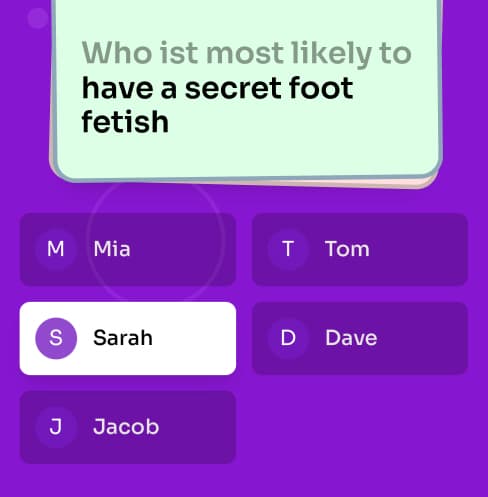
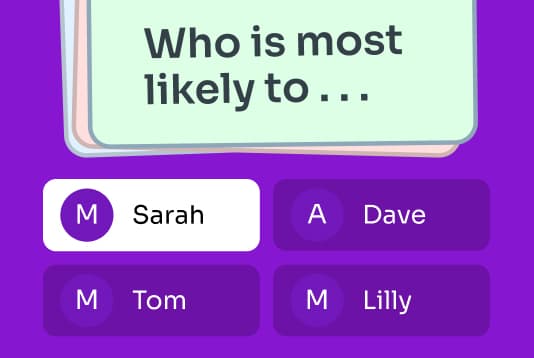
How It Works: Someone poses a scenario starting with “Who is most likely to…?” and everyone either points at or votes for the person in the group that best fits that description. For instance, “Who is most likely to accidentally send a text to the wrong person?” On the count of three, everyone points to who they think that would be (or says the name). Majority rules, and typically the person with the most fingers pointing at them should own the title proudly (or take a bow, or if you’re adding a drinking element – take a sip). The fun is in the discussion: “Oh, we all pointed at Sarah because remember that time she…!” It’s great for generating laughter and telling on each other’s habits.
What Makes It Fun: It’s collectively interactive. Instead of one person being on the spot, everyone is involved each round – either voting or being voted for. It celebrates the funny stereotypes and running jokes within your friend circle. Someone always late? They’ll get tagged as “most likely to oversleep and miss their own surprise party.” Got a friend who’s a daredevil? They’ll be “most likely to go skydiving on a whim.” These prompts let you appreciate (and poke fun at) each other’s personalities. Also, because it’s hypothetical, people tend to be less defensive – it’s about what could happen, not what did. It’s usually all in good fun, and even flattering sometimes (“Who’s most likely to become a millionaire?” – hey, if everyone points at you, that feels nice!).
Potential Downsides: Groupthink. Sometimes people can feel a teeny bit hurt if they’re always the answer for something not-so-nice (like “most likely to get arrested” or something 😅). The key is to keep questions mostly playful and not too mean or specific. Also, if not everyone knows each other well, some “most likely to” questions might fall flat because people aren’t sure who to pick. In that case, stick to generic or universally funny scenarios until the group warms up. Another thing: without some structure, this game can fizzle quickly (“uhh, I can’t think of any more questions”). It helps to have a list of good “Most Likely To” prompts on hand (lucky for you, we provided 100+ earlier!). Or use an app like Vote Game that provides endless questions. If you do incorporate drinking, it’s usually like: if you got the most votes, you drink (or assign drinks). That can add a layer of fun, but even without it, the game stands strong.
Best For: Any group, honestly. It’s the most easygoing of the three games here. It works with close friends who have tons of inside jokes, and it works with new acquaintances by keeping things general. It’s also typically very funny rather than deeply embarrassing. Great for when you want to keep the mood light and inclusive. It shines in casual party settings, like while chilling in a circle on the living room floor or around a bonfire. If Truth or Dare feels too extreme and Never Have I Ever feels too revealing, Most Likely To hits the sweet spot of funny but not invasive. Plus, you can play it for as long or short as you want – it doesn’t require keeping score or eliminating anyone. It’s really just about the laughs and the “so true!” moments.
And The Winner Is… 🏆🤔
Okay, so which game reigns supreme in this ultimate showdown? Honestly, declaring an absolute winner is tough because each game brings something different to the table (or circle, as it may be). It really depends on the vibe of your party and what you’re in the mood for:
If you want high-energy, daring antics and don’t mind a bit of embarrassment: Go for Truth or Dare. This one will create outrageous memories and likely a few iconic inside jokes (just handle with care – keep it fun, not cruel).
If you’re aiming to spill secrets and learn way more about each other’s pasts: Never Have I Ever is your best bet. It can start tame and end up extremely eye-opening. Perfect for a group that loves some drama and doesn’t mind oversharing. Just be ready to accept that what gets said (or seen) during the game might shock you – but also bring you closer. Like one expert note says, “a stranger will leave with some very personal information about you” by the end – so know that going in!
If you’re looking for laughs, roasting each other, and keeping things light: Most Likely To is the champ. It’s the least pressure-filled and usually causes the most group giggling. Great as an icebreaker or a wind-down game when everyone’s just chilling.
One cool idea: Combine them throughout the night! They’re not mutually exclusive. Start with Most Likely To to loosen up, transition to Never Have I Ever once people are warmed up, and if you’re feeling wild, throw in a late-night round of Truth or Dare when only the brave remain. You could even incorporate all three into a single session: e.g., spin a bottle to see which game you’ll play for each round – spin lands on person A, they choose truth/dare, person B has to answer a “Never Have I Ever” style question, person C gets a “Most Likely To” directed at them, and so on. It’s like a mini game Olympics.
The ultimate showdown verdict: There’s no one-size-fits-all winner. The “best” game depends on your group’s mood and comfort level. Truth or Dare wins for adrenaline and outrageousness, Never Have I Ever wins for revelations and bonding, and Most Likely To wins for humor and ease.
In the end, the real champion is you and your friends having fun. These games are classics because they get people interacting and breaking out of the usual small talk. They lead to those nights – you know, the ones you reference with “Omg, remember when we played…?” and everyone cracks up. So pick one (or all), and enjoy the showdown at your next gathering. No matter which game you play, you’re in for a memorable time. Game on! 🎉